

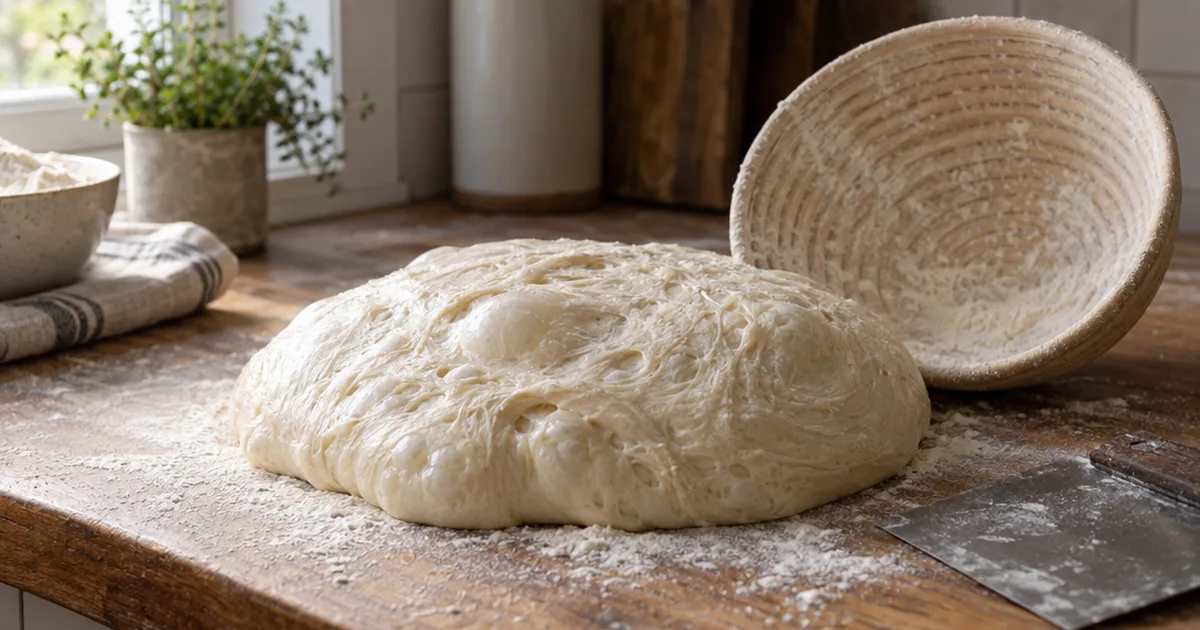
In this guide, you’ll learn how to spot overproofed sourdough, how to save it and how to stop it from happening again.
Here’s the deal: overproofing sounds like a disaster, but it’s almost always fixable. Even bread that bakes flat still makes great toast.
Let’s dive right in.
What Overproofed Sourdough Actually Means
Overproofed sourdough is dough that rose for too long during proofing, the rise it gets before baking. The whole time, wild yeast in your starter eats sugar in the flour and releases carbon dioxide gas.
That gas fills lots of tiny bubbles, and a stretchy web of gluten holds each one in place. When the rise runs too long, the gluten gets weak and thin, so the bubbles merge, leak and collapse.
The result? The dough has no strength left for oven spring, the final burst of rise in the first minutes of baking.
Overproofed bread is tired, not ruined.
How to Tell If Your Sourdough Is Overproofed
Check before you bake if you can, because you still have time to fix the dough.
Before Baking: The Poke Test
The finger poke test is the quickest check. Flour a finger, press it about half an inch into the dough, then watch the dent:
- Springs back fast: underproofed, so give it more time
- Springs back slowly and leaves a small dent: ready to bake
- Doesn’t spring back at all: probably overproofed
Overproofed dough also tends to look puffy and slack, with big bubbles or wrinkles on top. It spreads when you tip it out and may smell boozy or very sour.
Note: the poke test takes some trial and error, especially on cold dough. Bake the same recipe a few times and muscle memory will do most of the work.
After Baking: A Flat Loaf and a Pale Crust
Baked overproofed dough usually comes out wide and flat, with weak oven spring and an ear that barely opens. The crust can look pale, because the yeast used up much of the sugar that would have browned it.
Underproofed vs Overproofed Sourdough
Both loaves can come out flat, so cut one open to tell them apart. An underproofed loaf is dense and gummy, often with a few big tunnels near the top.
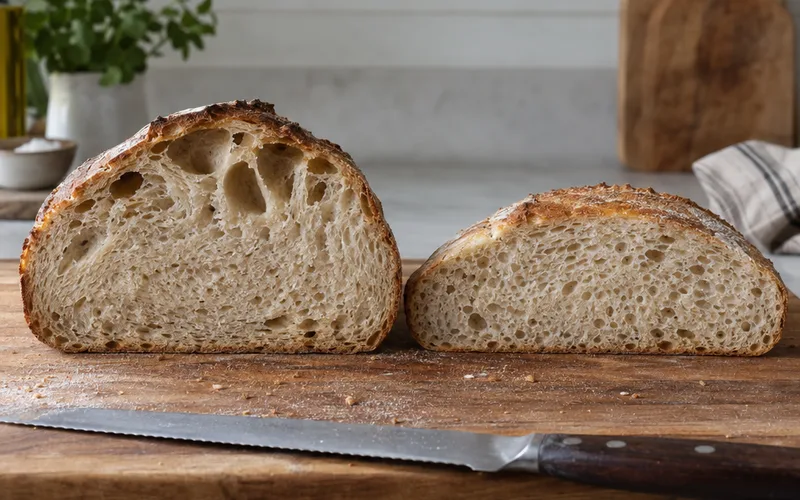
That gummy texture has its own causes, and why sourdough turns gummy walks through the fixes. An overproofed one is more evenly open, with small collapsed holes and a sour edge, and it’s usually still pleasant to eat.
How to Save Overproofed Sourdough Dough
Caught it before baking? Pick the option that fits how slack the dough feels.
Option #1: Degas, Reshape and Proof Again
This is the first fix I’d try:
- Turn the dough onto a lightly floured counter and press out the big bubbles.
- Reshape it with a few firm folds to rebuild surface tension.
- Cover it with a damp towel and let it rise again, checking after about 20 minutes.
- Bake once the poke test says it’s ready.
Why does this work? Reshaping pops tired bubbles and tightens the gluten, so the yeast can fill fresh pockets of gas.
Pro Tip: if the dough is too sticky to shape, chill it in a covered bowl for an hour first. Cold dough is much easier to handle.
Option #2: Bake It in a Loaf Pan
Really slack dough won’t hold a free-form boule. A greased loaf pan gives it walls to climb, so you still get tall slices for sandwiches.
Option #3: Turn It Into Focaccia or Pizza
If the dough is runny, stop fighting it. Press it into a well-oiled pan, dimple it with your fingers and bake it as focaccia.
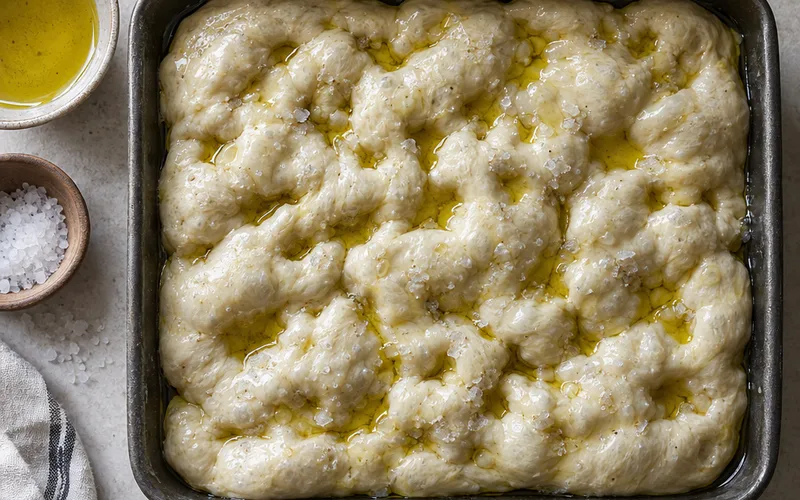
You can also stretch it into a thin pizza base, which needs very little rise. Shape and top it the way you would any homemade pizza dough.
What to Do With an Overproofed Loaf
Already baked it? Don’t toss it, because it still tastes like sourdough.
Slice it thin for toast or grilled cheese, or cube it for croutons. You can also follow the steps for making breadcrumbs from bread and freeze them for later.
How to Stop Overproofing Next Time
Prevention comes down to one habit: watch the dough, not the clock. Recipe times assume a certain kitchen temperature, and yours will be different.
Here’s what I recommend:
- Mark a straight-sided container. In this site’s sourdough bread recipe, the first rise ends when the dough grows 50 to 75 percent.
- Adjust for heat. A warm kitchen or warm water speeds up the yeast, so check sooner in summer or use less starter.
- Use the fridge. A cold proof slows fermentation and widens your window, which is how the overnight sourdough method works.
- Bake with a starter at its peak. A starter that rose and collapsed is past it, and a steady routine for feeding your starter makes every rise more predictable.
These cues work for any loaf, and the basics of proofing bread cover the rest.
Your Next Sourdough Bake
Overproofed sourdough is a timing problem, and the fix is usually a reshape and a shorter second rise.
So which fix are you going to try first: reshaping, the loaf pan or focaccia?
Frequently Asked Questions
What happens if you overproof sourdough?
The gluten weakens and the gas leaks out, so the dough spreads and bakes flat with a paler crust.
Can you recover overproofed pizza dough?
Yes, press out the gas, reshape it into balls and let it relax until it stretches easily. Pizza needs very little rise, so it usually bakes up fine.
Can you fix underproofed sourdough?
Yes, if you catch it before baking. Give it more time somewhere warm and repeat the poke test every 30 minutes or so.
How long is too long to proof sourdough bread?
There’s no fixed number, because temperature sets the speed. Warm dough can pass its peak within a few hours, while the cold proof in this site’s sourdough recipe runs 12 to 48 hours.