

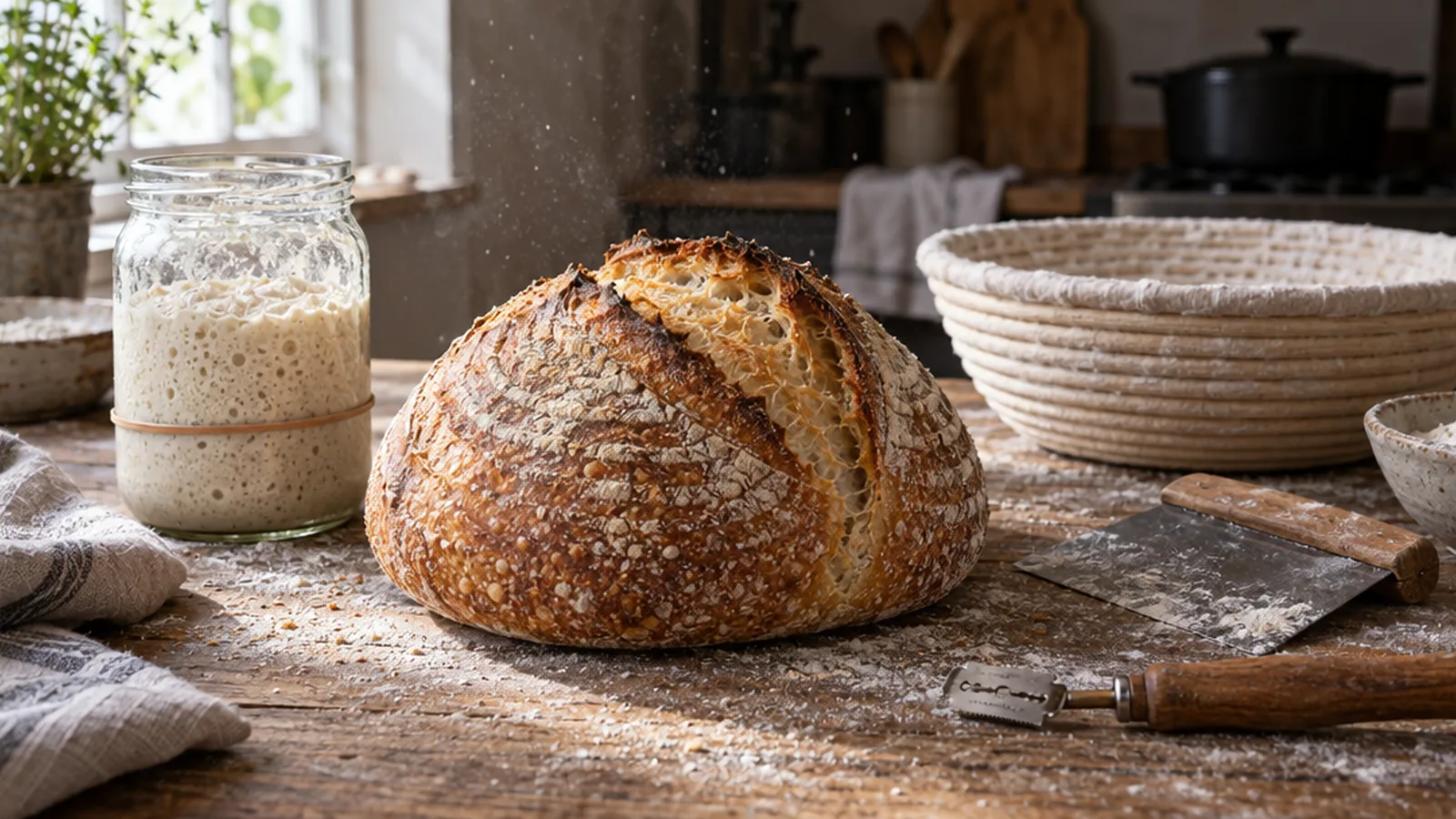
Sourdough is bread leavened by a living starter of flour and water instead of commercial yeast. It rewards patience, and it can feel intimidating when a starter stalls or a loaf comes out flat. This category walks through the whole process, from creating and feeding a starter to mixing, shaping and baking a loaf, with checkpoints that tell you what to look for at every stage.
What this category covers
You will find guidance on building a starter from scratch, feeding and reviving it, and adjusting your routine to your kitchen. The loaf guides cover beginner, overnight and same-day approaches, along with bulk fermentation, shaping, proofing and scoring. Sourdough sandwich loaves and whole-grain breads sit here too, as do recipes that use leftover starter. Commercial-yeast loaves, nutrition questions and general equipment roundups live in other categories.
Main sub-topics
Sourdough starter recipe
Everything begins with a healthy starter. This sub-topic covers making one, choosing flour, feeding schedules, naming it if you like, and working out why a starter is slow, sluggish or not rising.
Whole wheat sourdough
Whole-grain flours ferment faster and absorb more water, which changes how dough feels and behaves. This sub-topic gathers whole wheat and rye loaves, sandwich breads and other grain-forward bakes, along with the adjustments they need.
Discard recipes
Feeding a starter leaves discard, and this sub-topic turns it into useful food. Expect everything from crackers and muffins to pizza dough, focaccia, desserts and quick breads that put discard to good use instead of the trash.
How to use this category
If you are new to sourdough, begin with the starter material and then move to a simple loaf. If your bread is gummy, flat or overproofed, look for the troubleshooting guidance in the loaf articles. If your fridge is full of discard, head to the discard recipes. The articles listed below appear under these sub-topics as they are published.