
In this guide, you’ll learn exactly which bread ingredients go into a loaf, what each one does, and how much of each to use.
Why does that matter? Because once you know the job of every ingredient, you can read any recipe, fix a dense loaf and swap things without guessing.
Here’s what we’ll cover:
- The four core bread ingredients
- A simple ingredient list with measurements
- The optional extras that make bread soft and rich
- How white, whole wheat and quick bread ingredients differ
Let’s dive right in.
The 4 Basic Bread Ingredients
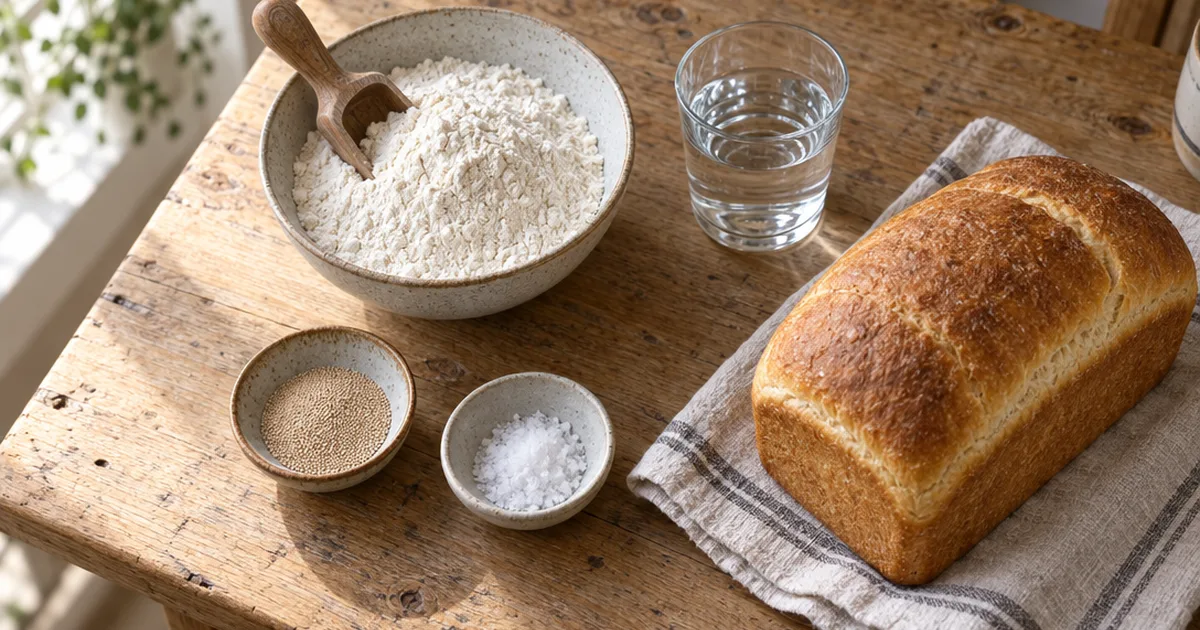
Strip any yeast bread down and you’ll find the same short list of ingredients to make bread: flour, water, yeast and salt. Those four make a complete loaf on their own, and everything else in a recipe is there to change the flavor, texture or crust.
So what does each one actually do?
Flour Gives Bread Its Structure
Flour is the backbone of every loaf. When you add water, two of its proteins link up to form gluten, a stretchy network that traps gas and lets the dough rise.
The rest is mostly starch, the carbohydrates that set into the soft crumb as the bread bakes. That’s why the type of flour you choose has such a big effect on how tall and chewy the loaf turns out.
Good news: plain all-purpose flour from your pantry, usually enriched with iron and B vitamins, makes a very good loaf. Bread flour has more protein, so it builds stronger gluten and a chewier crumb (more on that below).
Water Brings the Dough to Life
Water hydrates the flour so gluten can form, and it wakes up the yeast. It also dissolves the salt and sugar so they spread evenly through the dough.
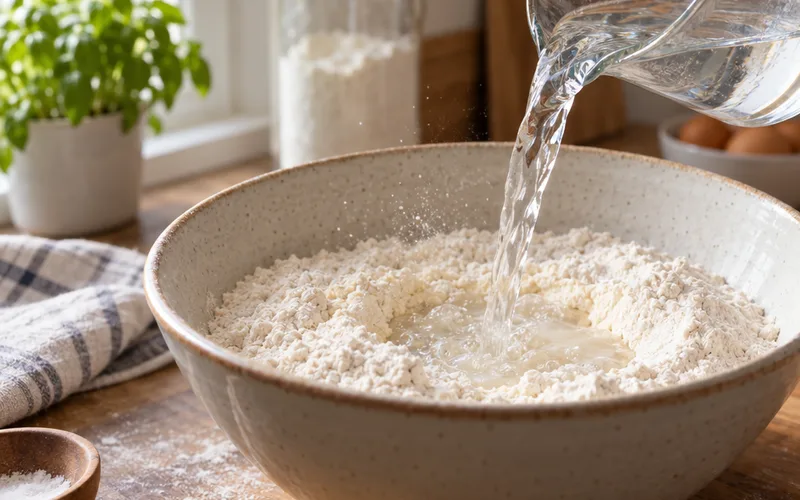
How much you add changes the whole loaf. A wetter dough bakes into a more open, irregular crumb, like ciabatta or focaccia, while a dry dough gives you a tight loaf that struggles to rise.
Temperature matters too. Aim for warm to the touch, about 105 to 110°F, which gets packaged yeast going without harming it.
Yeast Makes the Bread Rise
Yeast is a living organism, and it’s the leavening agent in most bread. It eats the sugars in the flour and gives off carbon dioxide gas, which the gluten traps in thousands of tiny bubbles.
That process is called fermentation. It also produces alcohol and acids, which add flavor, so a slower rise, such as an overnight rest in the refrigerator, usually tastes better.
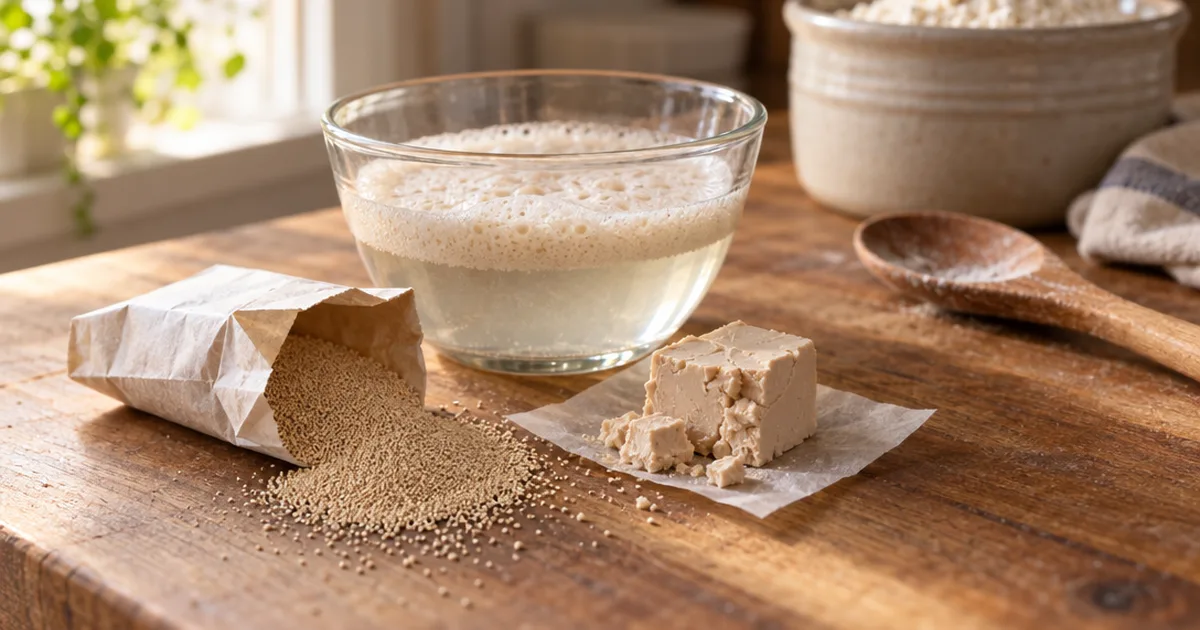
The kind in a grocery store packet is baker’s yeast, and you’ll see it sold in three main forms:
- Active dry yeast: dissolve it in warm water first, until it foams
- Instant yeast: mix it straight in with everything else
- Bread machine yeast: an instant yeast sold for bread machines
You can usually swap instant for active dry in the same amount. If you’re curious where those granules come from, here’s how commercial yeast is made, and you can even make your own yeast at home.
Salt Adds Flavor and Control
Salt is easy to cut back on, but don’t skip it. Bread made without it tastes flat, and salt is where most of a loaf’s sodium comes from.
Salt also slows the yeast down, which keeps fermentation steady instead of runaway. On top of that, it tightens the dough, so it’s easier to shape and holds its height better.
Table salt, kosher salt and sea salt all work. Just measure carefully, because a spoonful of fine grains weighs more than a flaky one.
A Simple Bread Ingredients List With Measurements
Want to see how the four fit together? Here’s a basic formula for one loaf of plain white bread:
| Ingredient | Amount (1 loaf) | Job in the dough |
|---|---|---|
| All-purpose or bread flour | 3 cups | Structure and gluten |
| Warm water | About 1 1/8 cups | Hydration |
| Instant or active dry yeast | 2 teaspoons | Rise and flavor |
| Salt | 1 1/2 to 2 teaspoons | Flavor and control |
Notice how small the yeast and salt amounts are next to the flour and water. That ratio is the core of nearly every yeast bread recipe, and the enriched breads below simply add extras on top of it.
Pro Tip: Weigh your flour if you have a kitchen scale. Scooping with a measuring cup packs it down, and too much flour is one of the most common reasons homemade bread comes out dense.
Optional Ingredients That Change Your Loaf
Once you have the basics down, extras let you shape the flavor and texture. These are called enrichments, and they’re what turn a crusty lean loaf into soft sandwich bread.
Here’s what the most common ones do:
| Ingredient | What it changes |
|---|---|
| White sugar or honey | Feeds yeast, sweetens, browns the crust |
| Butter or oil | Softer crumb, keeps bread fresh longer |
| Milk | Softer, richer crumb and a darker crust |
| Eggs | Richer flavor, golden color, extra lift |
A little sugar goes a long way, since a tablespoon or two gives the yeast an easy first meal and helps the crust brown. But a lot of sugar slows it down, which is why sweet doughs often rise slower.
Fat works differently. Butter, vegetable oil or olive oil coats the gluten strands, so the crumb comes out tender instead of chewy, and the loaf stays soft for a few extra days.
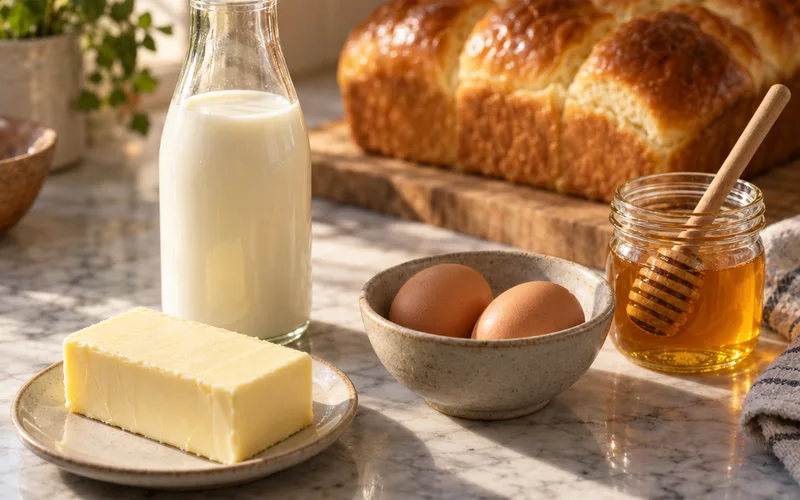
Milk and eggs push things further, adding protein and a little calcium along with richness. They’re the reason a brioche, challah or cinnamon roll tastes rich and looks golden, while a baguette made with only the four basics has a crackly crust and a chewy, open crumb.
How White, Whole Wheat and Quick Bread Ingredients Differ
The ingredient list shifts depending on the bread you’re making.
White bread uses refined white flour plus the other basics, often with a little sugar, milk and butter for a soft sandwich loaf.
Whole wheat bread (often called brown bread) swaps some or all of the white flour for whole wheat flour. The bran adds dietary fiber, but it also soaks up liquid and cuts through gluten, so these loaves need a wetter dough and usually rise less.
Quick bread skips yeast entirely. Instead, baking soda or baking powder makes it rise in the oven, so you get banana bread, cornbread or soda bread without any rising time.
Can You Make Bread Without Yeast?
Yes, you can. You just need a different way to make the loaf rise.
The easiest route is a chemical leavener like baking powder, which is how soda bread, flatbreads and quick breads work. These are great when you’re out of yeast, and you’ll find plenty of breads without yeast that come together in under an hour.
The other route is wild yeast. A sourdough starter is just flour and water that has captured natural yeast and bacteria, and once it’s active, it can replace the packet entirely.
If that sounds fun, start with a homemade sourdough starter and give it a week or two to get strong.
Bottom line: yeast-free bread is real bread, but expect a denser, cake-like crumb unless you use a starter.
How to Pick the Right Flour
Flour is where most bakers get stuck, so here’s the simple rule: more protein means more gluten, and more gluten means a taller, chewier loaf.
That’s why bread flour is the classic pick for yeast bread. Still, all-purpose flour works fine in most sandwich loaves.
Want the details? This side-by-side look at bread flour and all-purpose flour shows where each one shines.
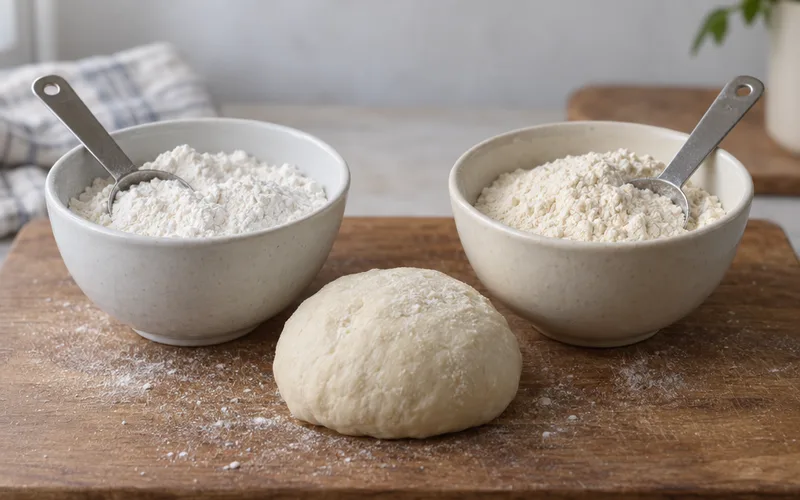
Cake flour sits at the other end. It’s low in protein and made for tender cakes, so check how bread flour compares to cake flour before you swap one for the other.
Out of bread flour mid-recipe? Use all-purpose flour, or add about 1 teaspoon of vital wheat gluten to each cup of it.
You’ll find more options in this list of bread flour substitutes.
Common Ingredient Mistakes (and How to Fix Them)
Most bread problems come down to one ingredient being off. Here are the big ones:
- Too much flour. The dough feels stiff and the loaf bakes dense. Add it gradually and stop when the dough is soft and just slightly tacky.
- Water that’s too hot. Very hot water can kill yeast before it starts. Aim for warm, not hot, and use a thermometer if you’re unsure.
- Old yeast. If active dry yeast doesn’t foam within 5 to 10 minutes, it’s probably dead, so start over with a fresh packet.
- Too much yeast. More yeast speeds up the rise, but too much gives the bread a beery, off flavor.
- Salt dumped on the yeast. In a bread machine, add water, sugar, salt, oil and flour first, then tuck the yeast into a small well on top so it doesn’t touch the liquid right away.
Note: Every flour absorbs liquid a little differently, so treat recipe amounts as a starting point. Adjust by feel until the dough comes together.
Putting the Ingredients Together
Ingredients are only half the story. The other half is what you do with them in the bowl and on the countertop.
Once the mixture comes together, kneading builds that stretchy network, so the dough turns from shaggy to smooth and stretchy. If you’re new to it, learning to knead dough properly by hand or with a stand mixer makes a huge difference.
Short on time? A no-knead bread skips that step and lets a long rest do that work instead.
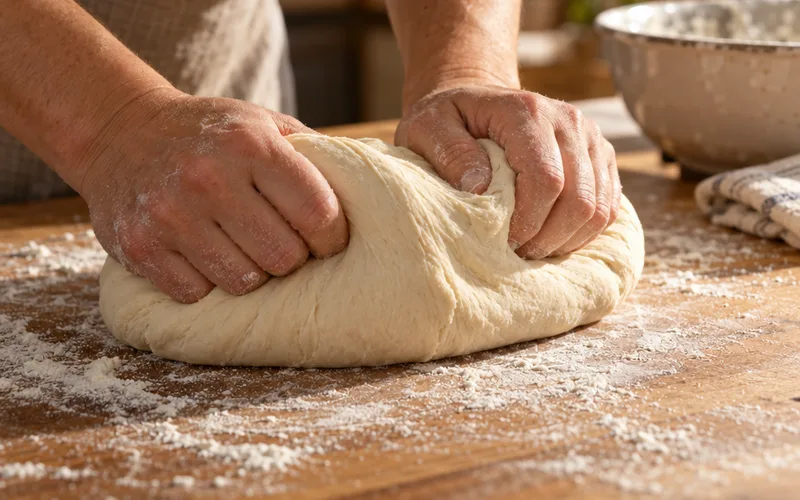
After that comes the rise: cover the bowl with plastic wrap or a towel while the dough roughly doubles. Then you shape the loaf, set it in bread pans greased with cooking spray or on a sheet pan, and bake it in a hot oven.
Getting the timing right is the whole point of proofing bread, and it’s where room temperature and your yeast amount really show up.
Prefer to let a machine handle it? A bread machine mixes, kneads, rises and bakes the same four basics, and these bread machine recipes are built around that.
For the full process from bowl to oven, start with the basics of how to bake bread.
Start With Four Ingredients
Bread really is that simple: flour for structure, water to bring it together, yeast for lift and salt for flavor. Everything else is a choice you make to get the loaf you want.
So which bread are you going to bake first: a lean, crusty loaf or a soft, enriched one?
Frequently Asked Questions
What ingredients should bread contain?
A basic loaf needs only flour, water, yeast and salt. Sugar, fat, milk and eggs are optional extras that change the flavor, softness and crust.
What are the 7 basic ingredients in quick bread?
Most quick breads use flour, a leavener such as baking soda or baking powder, salt, sugar, fat, eggs and a liquid like milk or buttermilk. The chemical leavener replaces yeast, so the batter goes straight into the oven without rising first.
What is an easy recipe for crusty bread?
Start with a lean dough of just flour, water, yeast and salt, like the basic formula above, and skip the butter, milk and sugar. Those enrichments soften the crust, so a lean loaf baked in a hot oven comes out much crisper.
What flour is best for bread?
Bread flour gives the tallest, chewiest yeast loaf because it has more protein to build gluten. All-purpose flour still makes a good loaf, so use it if that’s what you have.
Can I make French bread without yeast?
Not true French bread, because its light, open crumb comes from yeast or a sourdough starter. A yeast-free loaf made with baking powder will taste fine, but it bakes up denser, more like a quick bread.
How do you make bread in a loaf pan?
Grease the pan, roll your risen dough into a log about as long as the pan, and set it in seam side down. Let it rise until it crowns just above the rim, then bake until golden and hollow-sounding when tapped.
What is the difference between a baguette and French bread?
A baguette is a long, thin French loaf made from a lean dough of flour, water, yeast and salt, with a crisp crust. In the US, “French bread” usually means a wider, softer loaf that may include a little sugar or fat.