
You grab a ciabatta roll for lunch because it looks rustic and simple. Then the question hits: is ciabatta bread healthy, or is it just white bread with better marketing?
In this guide, I’ll show you what’s in ciabatta, what real labels say, and how it compares with sourdough, white bread, baguette and focaccia. You’ll also get clear answers for weight loss, blood sugar and cholesterol, plus easy ways to make ciabatta work harder for you.
Let’s dive right in.
Is Ciabatta Bread Healthy? The Honest Verdict
Ciabatta is a decent everyday bread, but it isn’t a health food. Its biggest strengths are a short ingredient list, very little fat and almost no sugar.
Its biggest weakness? Most ciabatta is made from refined white flour, so it’s low in fiber and digests fast.
That puts it in the middle of the bread pack. It beats heavily processed sandwich loaves on simplicity, but it trails whole grain, rye and true sourdough on nutrition.
So the real answer depends on three things: the flour, the portion and what you eat with it. Get those right and ciabatta fits comfortably into a healthy diet.
What’s Actually in Ciabatta Bread?
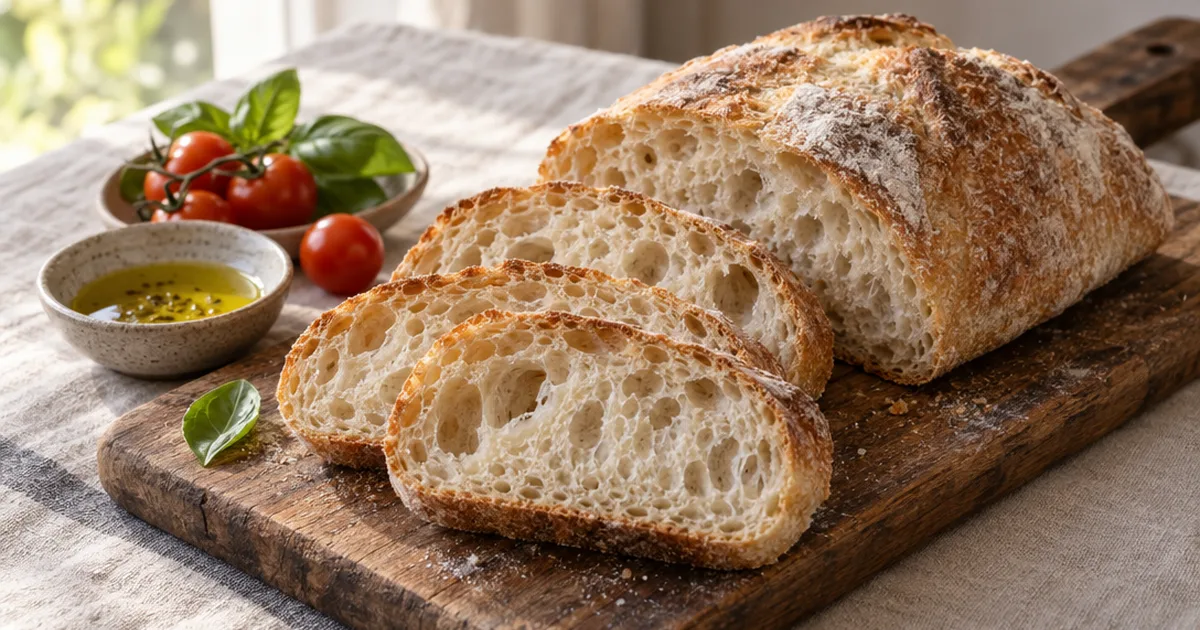
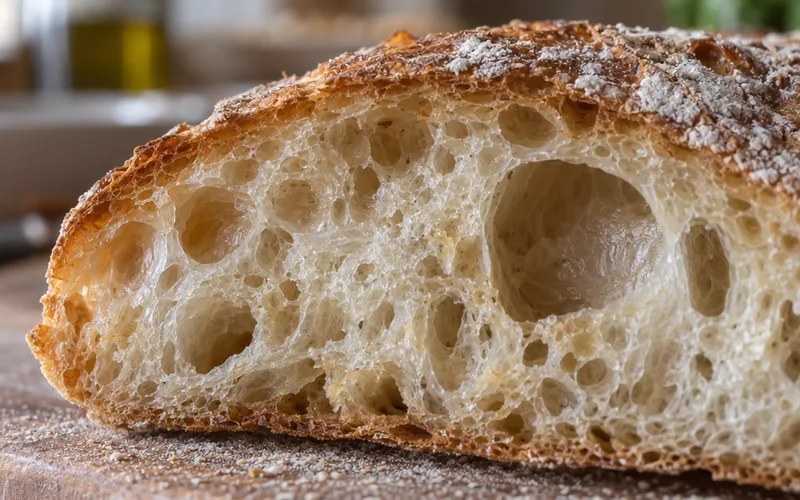
Ciabatta is a flat, open-crumbed Italian bread with a thin, crisp crust. Traditional ciabatta needs only four ingredients: wheat flour, water, salt and yeast.
That very wet dough is what creates the big, airy holes. It also means bakers rarely need sugar, fat or conditioners to get a good result.
That simplicity sets ciabatta apart from classic Italian breads like focaccia, which lean on olive oil.
Some bakeries add a splash of olive oil for flavor and a softer crumb. Store-bought versions can also include extra ingredients, so the label matters more than the name.
Does Ciabatta Have Eggs or Dairy?
Traditional ciabatta contains no eggs, milk or butter. That makes basic ciabatta naturally suitable for Vegan and Vegetarian diets.
Some commercial breads still slip in dairy ingredients such as whey or milk powder. If you avoid animal products or have a milk allergy, check the ingredient list and Allergens statement on every brand you buy.
Ciabatta Nutrition Facts: What the Label Shows
The fastest way to judge any bread is to read the Nutrition Facts panel. Here’s what two common store-bought ciabattas look like, based on Eat This Much’s nutrition listings:
| Per serving | Whole Foods Market ciabatta | Walmart ciabatta |
|---|---|---|
| Serving size | 1/4 loaf (70g) | 1 1/2-inch slice (56g) |
| Calories | 140 | 130 |
| Calories per 100g | 200 | 232 |
| Carbohydrate | 28g | 27g |
| Fiber | 1g | 1g |
| Protein | 5g | 5g |
| Fat | 0.5g | 0.5g |
| Sodium | 300mg | 310mg |
Notice the serving sizes. The Walmart slice is lighter, so the calories per 100g show it’s actually the denser bread, at 232 calories versus 200.
The macronutrient split tells the rest of the story. Eat This Much breaks both down to about 82% carbohydrate, 15% protein and 3% fat, so ciabatta is mostly starch.
Vitamins and minerals vary more: Walmart’s listing shows 2mg of iron, 7mg of calcium and 48mg of potassium per slice. The Whole Foods Market loaf lists just 0.4mg of iron.
So mineral content can differ a lot by brand, and the label is the only way to know what yours delivers.
What Ciabatta Gets Right
Let’s start with the good news. Both listings show 0g of saturated fat, 0g of trans fat and 0mg of cholesterol.
Sugar is barely there either. The Whole Foods Market loaf lists 0g of sugar and Walmart’s lists 1g, which is far less than many soft white breads and sweet rolls.
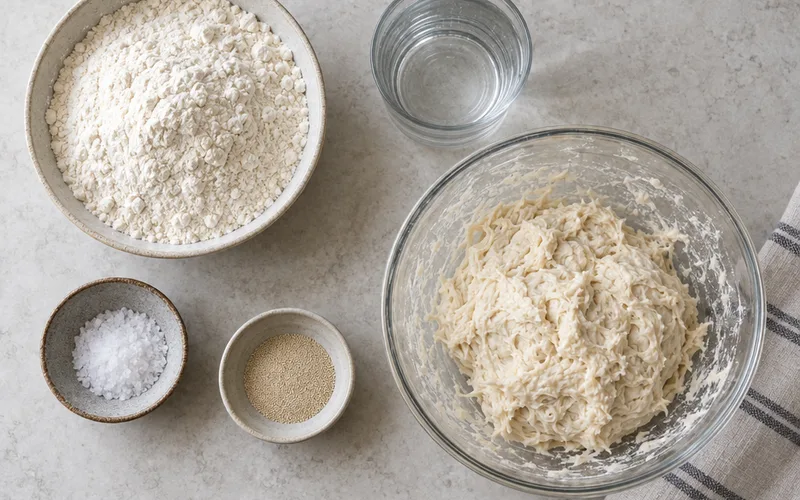
A simple ingredient list is another plus. When a bread is made from flour, water, salt and yeast, you skip the long list of additives that shows up in some packaged breads.
Ciabatta also delivers about 5g of protein per serving. That’s not a lot, but it’s a useful start when you build a sandwich around it.
Key Takeaway: ciabatta is a clean, low-fat bread. The real question is what it’s missing.
Where Ciabatta Falls Short
Here’s the deal: ciabatta’s problems all come from refined flour and portion size. Let’s break them down.
Low Fiber From Refined Flour
White wheat flour is milled from the starchy endosperm, with most of the bran and germ removed. Those removed parts carry most of the grain’s fiber and B vitamins, such as Thiamine, Riboflavin, Folate and Vitamin B6.
The bran and germ also hold Vitamin E and minerals like Zinc, Magnesium, Manganese, Copper, Selenium and Phosphorus.
That’s why both listed breads give you only 1g of fiber per serving. A whole grain bread keeps the bran and germ, so it usually delivers noticeably more.
Why does that matter? Dietary fiber slows digestion and helps you feel full, so a low-fiber bread tends to leave you hungry sooner.
Sodium Adds Up Fast
Salt is essential in bread dough, because it controls the yeast and strengthens gluten. But it adds up.
Eat This Much lists 300mg of sodium in a quarter loaf of Whole Foods Market ciabatta, or 13% of the Daily Value. Build a sandwich with two portions, cured meat and cheese, and the total climbs quickly.
A Quick Rise in Blood Sugar
Refined starch breaks down into glucose quickly. That means white ciabatta has a high glycemic index, a score for how fast a food raises blood sugar levels.
The portion matters too. Glycemic load factors in how much carbohydrate you actually eat, so a whole ciabatta roll hits harder than one thin slice.
Ciabatta vs. Other Breads
Ciabatta rarely gets eaten in a vacuum. You’re usually choosing between it and another bread, so here’s how it compares.
Ciabatta vs. White Bread
Nutritionally, ciabatta and white bread are close cousins, because both rely on refined flour. Neither offers much fiber.
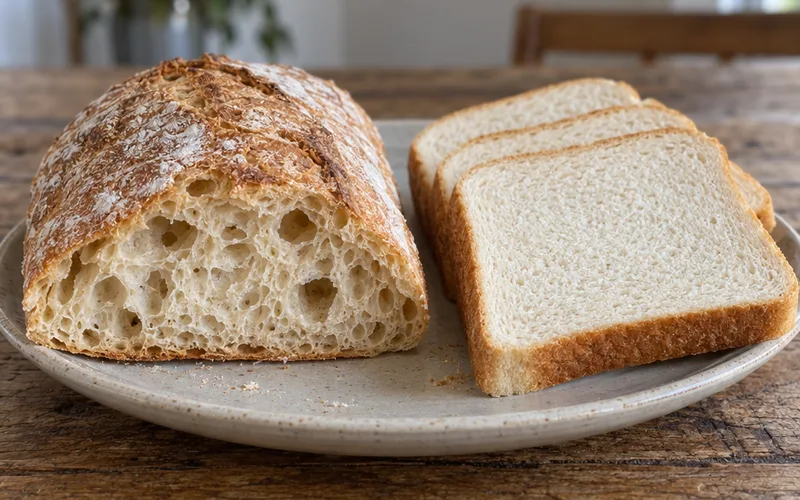
The difference is usually the ingredient list. Packaged white sandwich bread often contains added sugar, oils and dough conditioners, while traditional ciabatta sticks to the basics.
Ciabatta vs. Sourdough
Sourdough usually wins this one. Its slow fermentation with wild yeast tends to lower its glycemic index and break down phytic acid, so it often raises blood sugar more gently.
Carbs and calories are still similar, as you’ll see if you check sourdough’s carb count.
Want the best of both? A sourdough-leavened ciabatta gives you ciabatta’s open crumb with the slow fermentation of a starter.
Ciabatta vs. Baguette
This one’s close to a tie. Baguette and ciabatta are both lean breads made from the same four basic ingredients.
Ciabatta sometimes includes a little olive oil, which adds a small amount of fat. In practice, the bigger difference comes from serving size and sodium on the specific label in your hand.
Ciabatta vs. Focaccia
Focaccia is ciabatta’s oilier relative. Wildgrain, a bread subscription brand, puts focaccia at about 4.5g of fat per serving compared with roughly 0.5g in ciabatta.
That extra fat mostly comes from olive oil, a Mediterranean staple that brings mainly monounsaturated fats and a smaller share of Polyunsaturated fats. If calories are your focus, ciabatta is the lighter pick, and how focaccia stacks up on its own is worth a look before you switch.
The two breads also differ in dough, shaping and texture, which the focaccia and ciabatta comparison covers in detail.
Ciabatta vs. Whole Wheat Bread
Whole wheat bread beats white ciabatta on fiber, minerals and staying power. It’s made from whole wheat flour, which keeps the bran and germ.
The good news? Whole wheat ciabatta exists, and it closes most of that gap while keeping the crust and chew you like.
Is Ciabatta Good for Your Health Goals?
The right answer changes with your goal. Here’s how ciabatta fits the most common ones.
Weight Loss
You can eat ciabatta and still lose weight. Weight loss comes down to your total calories and overall eating pattern, not one bread or a food that claims to boost your metabolism.
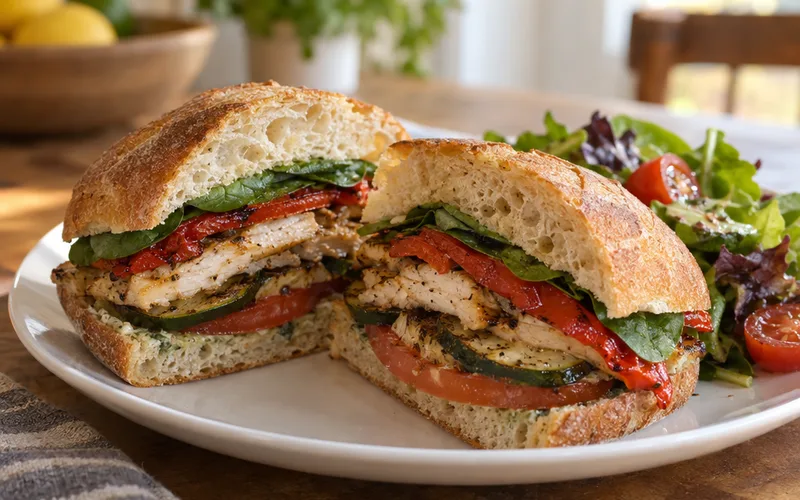
The catch is satiety. With 1g of fiber per serving, ciabatta won’t keep you full on its own, so pair it with protein and vegetables and watch the portion.
If you’d rather switch breads, a lower-calorie sourdough is one way to keep bread in your meals while you cut back.
Diabetes and Blood Sugar
White ciabatta can raise blood sugar quickly, so it isn’t an ideal everyday bread if you have diabetes. Smaller portions, whole wheat versions and pairing it with protein, fat and fiber can soften that rise.
Responses to the same food vary from person to person. If you’re managing diabetes, ask your doctor or a registered dietitian how bread fits your plan.
Cholesterol and Heart Health
Ciabatta itself is friendly here. The two listings show 0mg of cholesterol, 0g of saturated fat and 0g of trans fat.
What you put on it matters more, since butter, salami and cheese add saturated fat fast.
Olive oil, tomatoes or grilled vegetables keep the meal lighter, which makes a simple bruschetta a smart way to serve it.
Keto and Low-Carb Diets
Ciabatta doesn’t fit a keto diet. One listed serving carries 26-27g of net carbs, which is hard to fit into a plan that keeps carbs very low.
If you’re cutting carbs, a dedicated low-carb bread made with alternative flours is a better fit.
Gut Health and Gluten
Traditional ciabatta is made from wheat, so it contains gluten and isn’t Gluten-Free. It’s not safe for anyone with celiac disease, although gluten-free ciabatta-style breads made with Rice flour do exist.
For digestion, a slow-fermented loaf may feel gentler than a fast commercial one, and whole wheat versions add fiber for your gut. If you need to avoid gluten entirely, start with breads designed for it, such as these gluten-free bread recipes.
How to Make Ciabatta a Healthier Choice
You don’t have to give up ciabatta. Instead, use these simple moves to get more out of it.
- Choose whole wheat ciabatta. It’s made with whole wheat flour that keeps the bran and germ, so you get more fiber and minerals.
- Check the serving size. Weigh a roll or compare it with the label, because a sandwich often uses double the listed portion.
- Build a balanced plate. Add protein, vegetables and a little healthy fat to slow digestion and keep you full longer. In the morning, ciabatta toast with Eggs and tomato makes a more balanced breakfast than toast with jam.
- Read the ingredient list. Look for flour, water, salt and yeast, and watch for added sugar, dairy or long additive lists.
- Compare sodium. Pick the brand with less sodium per 100g when you buy bread often.
Pro Tip: When you bake bread at home, you control the flour and salt before anything goes in the oven. Swapping part of the white flour in a homemade ciabatta for whole wheat flour adds fiber without losing the open crumb entirely.
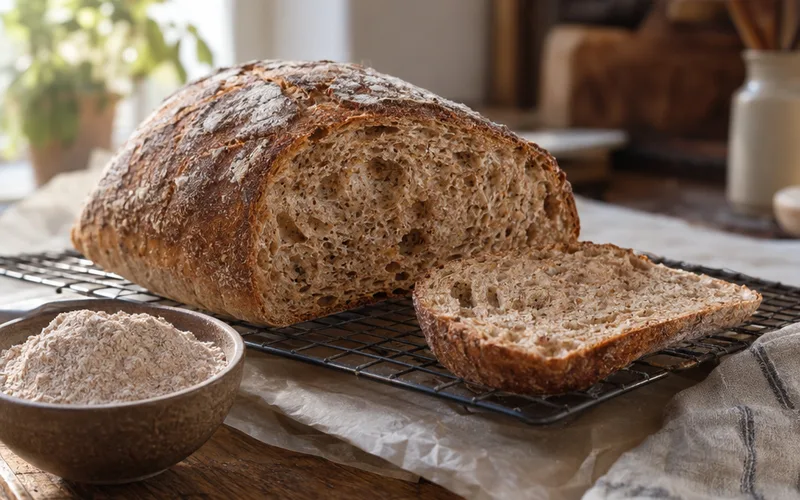
If you love a rustic crust but want more nutrition, a whole wheat artisan loaf is another easy upgrade. For sandwiches, a healthy homemade loaf lets you choose every ingredient yourself.
What Is the Healthiest Bread You Can Eat?
Ciabatta won’t top the list, and that’s fine. The breads that usually come out ahead are whole grain breads, sprouted grain bread and true sourdough.
Rye bread is another strong option, and rye’s health benefits come largely from its fiber. You’ll see these ranked side by side when you compare bread nutrition across everyday options.
The healthiest bread is still one you’ll eat in sensible portions as part of balanced meals. That’s where ciabatta can earn its spot.
The Bottom Line
Ciabatta is a simple, low-fat bread, but refined flour keeps its fiber low and its blood sugar effect high. Choose whole wheat versions, mind the portion and pair it with protein and vegetables.
Which swap are you going to try first?
Frequently Asked Questions
What is the nutritional information for ciabatta bread?
Eat This Much lists Whole Foods Market ciabatta at 140 calories per quarter loaf (70g), with 28g of carbs, 1g of fiber, 5g of protein, 0.5g of fat and 300mg of sodium. Walmart’s ciabatta is similar per slice, at 130 calories and 310mg of sodium.
Are ciabatta rolls good for you?
Ciabatta rolls share the same basic profile as the loaf: low fat, little sugar and not much fiber. A whole roll is often bigger than one listed serving, so check the weight on the package before you count it as a single portion.
Does Walmart sell ciabatta bread?
Yes. Walmart sells ciabatta bread and ciabatta rolls, and Eat This Much’s listing shows its ciabatta at 130 calories per 1 1/2-inch slice.
Is ciabatta bread better for you than regular bread?
It depends on what regular bread means to you. Ciabatta usually has a shorter, simpler ingredient list than packaged white sandwich bread, but it isn’t more nutritious than a whole grain loaf.
Is ciabatta healthier than sourdough bread?
Usually not. Sourdough’s long fermentation tends to give it a lower glycemic index, so it often has a gentler effect on blood sugar than white ciabatta.
Which is healthier, baguette or ciabatta?
They’re very close, because both are usually made from refined wheat flour, water, salt and yeast. Compare the labels for sodium and serving size, or pick a whole wheat version of either one.
What are the top 3 healthiest breads?
Whole grain breads, sprouted grain breads and true sourdough usually rank near the top. Dense rye bread is another strong pick because it tends to carry more fiber than white loaves.
What is artisan bread?
Artisan bread is bread made in small batches with simple ingredients and slower methods, such as long fermentation and hand shaping. Ciabatta, baguette and sourdough are all common examples.