
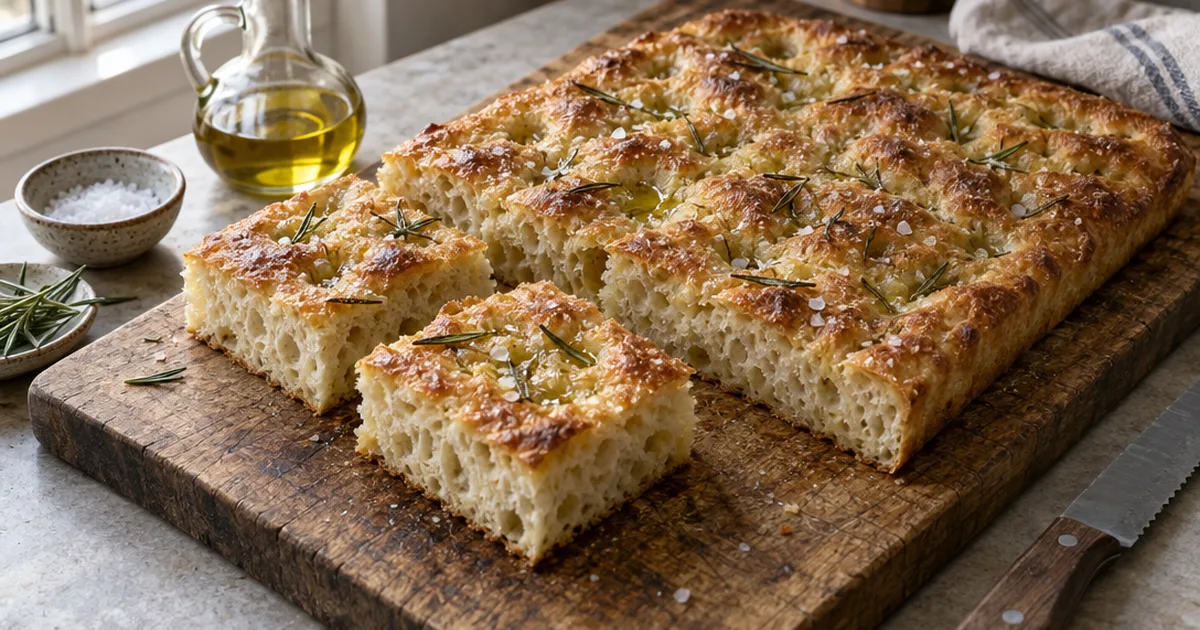
You want one number for focaccia calories. Here’s the problem: listings for the same kind of bread can disagree by more than 100 calories a slice.
In this guide, I’ll show you what real focaccia listings say, why the numbers swing so much and how to estimate homemade focaccia calories. Let’s dive right in.
Focaccia Calories Per Slice, Brand by Brand
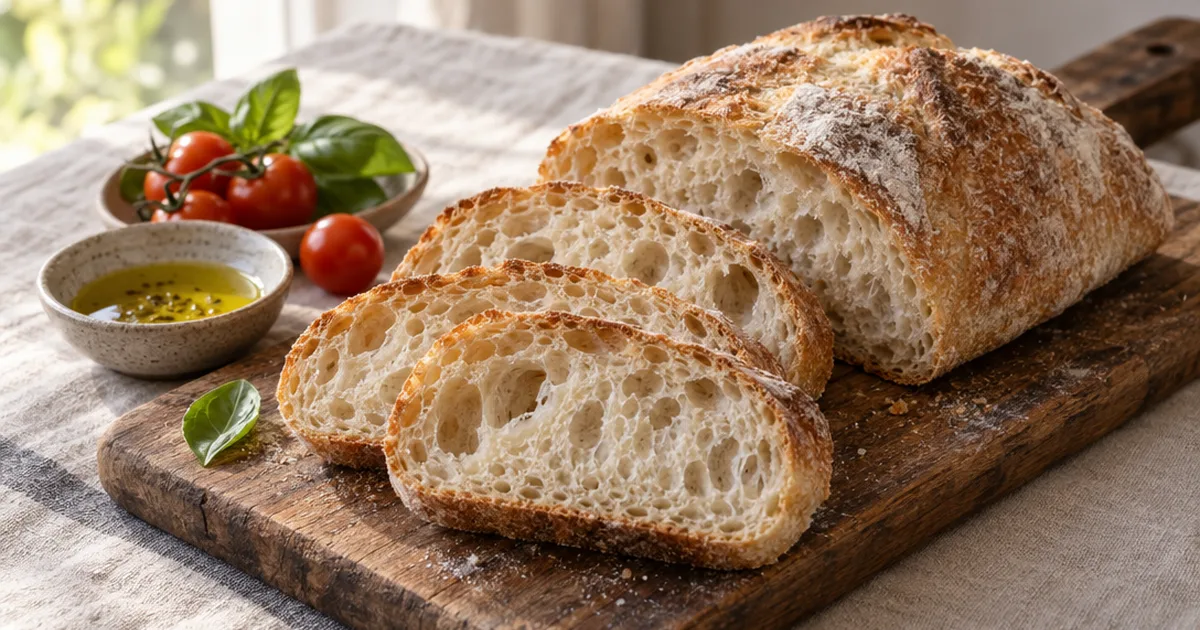
Focaccia bread is a flat Italian bread with olive oil in the dough and brushed over the top. That oil gives it a rich crumb and a crisp base, and it also adds calories.
So how many calories are in a slice? Here’s what MyFoodDiary’s food database lists for branded slices:
| Focaccia (MyFoodDiary listing) | Slice weight | Calories |
|---|---|---|
| Ace Bakery Rosemary | 50g | 120 |
| Panera Bread Black Pepper | 57g | 140 |
| Great Harvest Focaccia Bread | 56g | 150 |
| Panera Bread Sea Salt | 57g | 160 |
| Great Harvest Italian Herb | 56g | 170 |
| Great Harvest Focaccia Blend | 121g | 320 |
Most of these slices weigh 50 to 57 grams and land between 120 and 170 calories. The 320-calorie outlier simply weighs more than twice as much.
In other words, a “slice” of focaccia is a weight, not a fixed amount. Always read the grams next to the calorie number.
Why the Same Focaccia Can Show Different Calories
Here’s the deal: one bakery’s focaccia can show two very different numbers, depending on where you look.
Eat This Much’s nutrition record for Great Harvest Bread Co focaccia lists 280 calories in a 57g slice, or 494 calories per 100g. MyFoodDiary’s listing for Great Harvest Focaccia Bread shows 150 calories in a 56g slice.
That’s nearly double for almost the same weight. Food databases pull from different labels and product versions, so one record can be outdated or simply wrong.
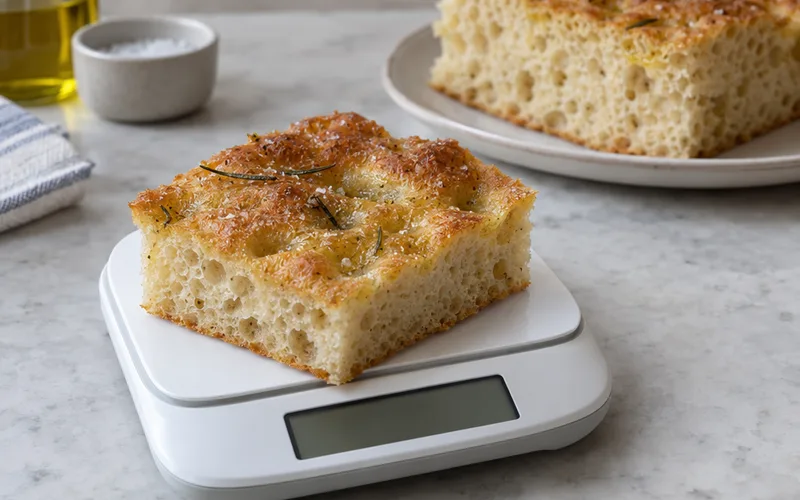
The fix is to compare calories per 100 grams. Ace Bakery’s slice works out to 240, MyFoodDiary’s Great Harvest slice to about 268 and Panera’s Sea Salt slice to about 281.
So most listings cluster around 240 to 280 calories per 100g. A number far outside that range is worth checking against the package in your hand.
Focaccia Nutrition Facts Beyond Calories
The Eat This Much record for that Great Harvest slice also shows where its calories come from. The split is 82% carbohydrates, 8% fat and 10% protein.
In grams, that’s 56g of carbs, 2g of fat, 7g of protein, 10g of sugar and 2g of fiber.
The biggest surprise is salt. That one slice lists 830mg of sodium, or 36% of the Daily Value.
The record lists 0mg of cholesterol but leaves Saturated fats and Trans fats blank, so check the ingredient list to see which oil a brand uses. CheckYourFood’s ingredient record also flags gluten as an allergen, so focaccia isn’t safe for anyone avoiding gluten.
Calories in a Focaccia Sandwich or Pizza Focaccia
A focaccia sandwich or pizza focaccia starts with the bread, then stacks every topping on top. None of the measured listings break these foods down reliably, so build the total yourself:
- Weigh the bread and count it at its label value, or about 240 to 280 calories per 100g.
- Add the cheese, cured meat, spreads and any oil drizzled on top, each from its own label.
- Add the vegetables last.
Thickness matters most, because a 120g piece already starts near 300 calories before any filling goes in. When you bake a focaccia sandwich at home or a sheet of focaccia pizza, you choose and count every topping.
How to Work Out Homemade Focaccia Calories
Homemade focaccia calories depend on two things you control: how much olive oil you use and how many pieces you cut.
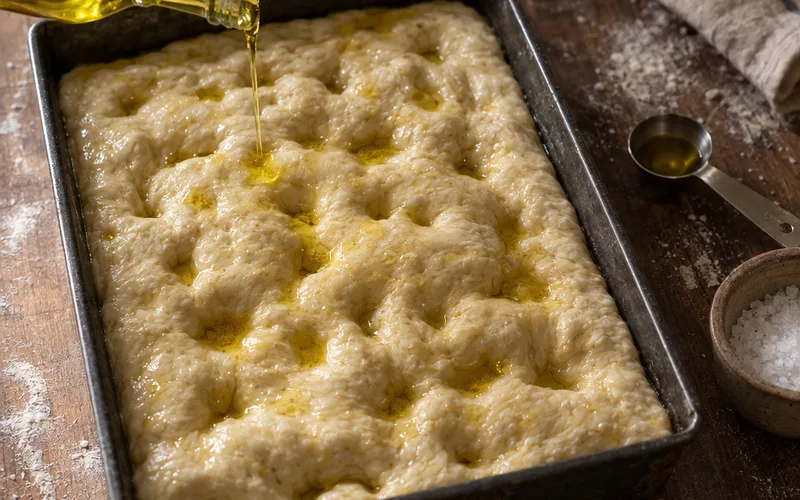
The best part? A kitchen scale and your ingredient labels are all you need.
- Add up the label calories for the flour, olive oil and toppings such as olives, garlic or cheese.
- Weigh the whole baked loaf and divide the total calories by its weight.
- Weigh your slice and multiply.
This “weigh once, slice anywhere” method works for any pan size, because you never guess what a slice means. Oil is the ingredient to watch, since many focaccia recipes pour it into the pan and over the dough.
How to Fit Focaccia Into a Calorie Goal
Can you eat focaccia on a diet? Yes, as long as your total intake for the day fits your goal.
The catch is that focaccia is easy to overeat, since 2g of fiber in that 57g slice won’t keep you full for long. So weigh one slice, pair it with protein and vegetables and skip the extra dish of oil.
Calories are only part of the picture, and whether focaccia is healthy also depends on its salt and toppings. Ciabatta is a leaner dough, so check ciabatta’s nutrition label and where focaccia and ciabatta differ before you switch.
You can also try a lower-calorie sourdough or compare bread nutrition across everyday loaves.
The Bottom Line
Focaccia calories mostly come down to slice weight and oil. Weigh your slice, check the label and build your toppings from there.
Which trick are you going to try first: weighing your slice or cutting back the oil?
Frequently Asked Questions
Does focaccia or ciabatta have more calories?
Focaccia usually does, because its dough and crust carry more olive oil. Ciabatta is a lean bread, but compare calories per 100g on both labels to be sure.
How many calories are in a focaccia sandwich?
Count the bread first, at about 240 to 280 calories per 100g in most listings. Then add each filling from its own label.
Is focaccia high in calories?
A typical slice is moderate, at 110 to 170 calories for 50 to 57 grams in MyFoodDiary’s listings. Large bakery pieces and oily toppings make it high.
How much is one serving of focaccia?
Most labels in MyFoodDiary’s listings use one 50 to 57 gram slice. CheckYourFood’s record uses a 75g slice, so check the weight behind the number.
How many calories are in a focaccia bread roll?
Weigh the roll and use its label’s calories per gram. A 57g roll lands near a 57g slice, or about 140 to 160 calories in most listings.